
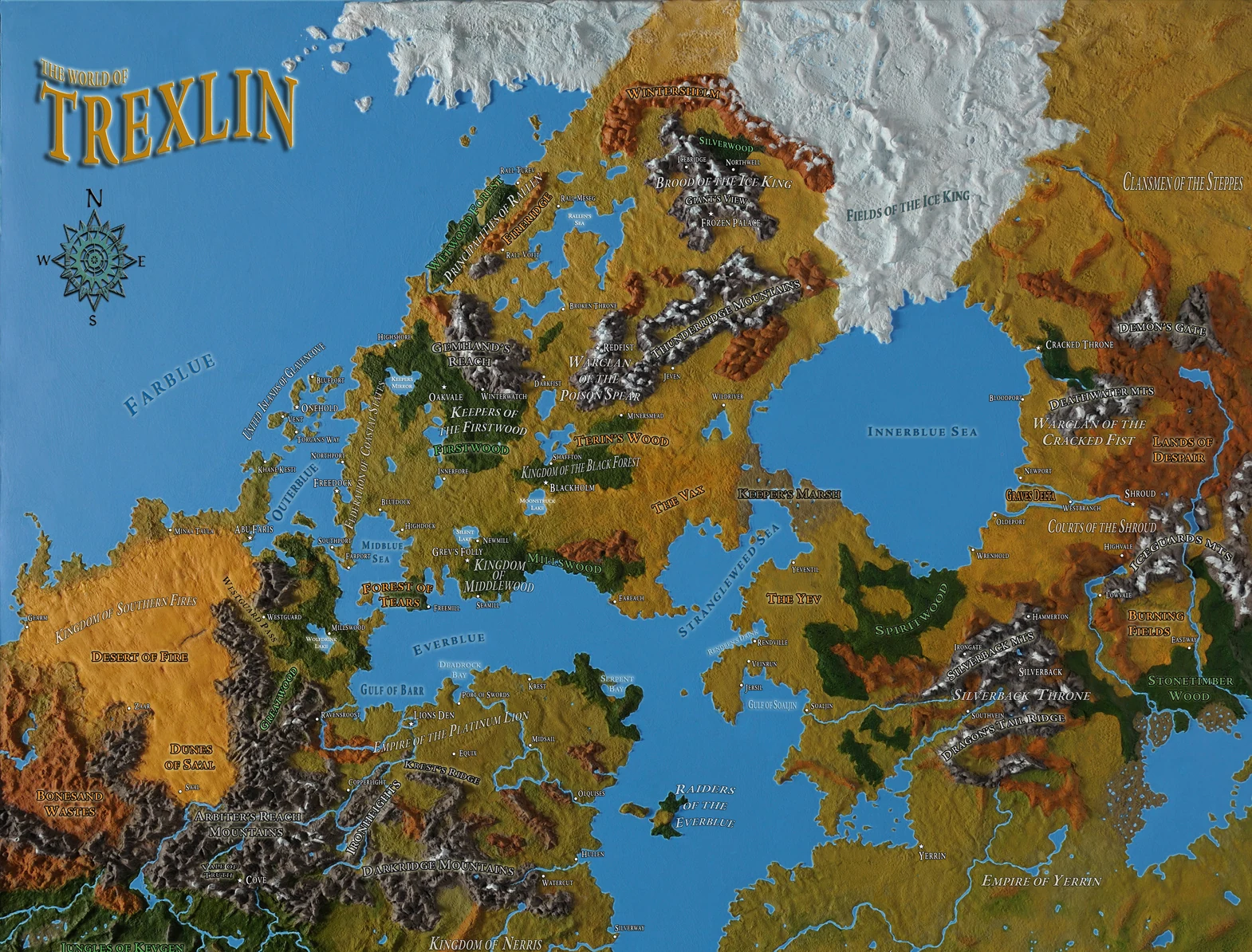
Trexlin has accumulated the things imagined worlds tend to accumulate when someone stays with them: calendars, languages, trade routes, military structures, pantheons, creatures, political fault lines, and a map dense enough to reward inspection. None of that is the point of Awakening the Seablade. It is the pressure behind the point.
Readers do not enter a fantasy novel through an encyclopedia. They enter through a person who wants something, fears something, misunderstands something, or is forced to change. In Awakening the Seablade, that doorway is Drex: an heir without memory or power, moving through a contest whose private stakes widen into a threat to the world around him.
Worldbuilding earns its place when it shapes choice. Focus matters because it changes what power means. Geography matters because distance, borders, and resources constrain action. History matters because characters inherit obligations and resentments they did not choose. A detail that never alters desire, danger, atmosphere, or consequence may be interesting, but it belongs outside the novel until the story needs it.
That is why 13 Scions treats novel-adjacent projects as possibilities rather than prerequisites. A map can orient a reader. A field guide can reward curiosity. A game can reveal systems through play. Each must add a new way of understanding the fiction instead of becoming homework required to enjoy it.
Trexlin.net remains the deeper reference for readers who want the creatures, nations, characters, and making-of material. The publishing site keeps its attention narrower: the book, the author, the publication, and the editorial principles that will apply to future worlds as well as this one.